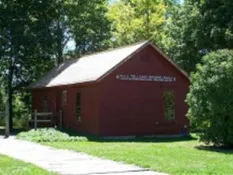
The Tollgate House is a truly unique piece of Michigan history — it is the only tollgate house that remains in Michigan today.
This small but significant building served as the Number 2 tollgate on the Lansing-to-Howell Plank Road, one of the state's early transportation networks.
Plank Roads in Michigan
In 1848, the Michigan State Legislature authorized the construction of plank roads — early highways made of wooden planks laid across the muddy frontier roads. These toll roads were privately operated and represented one of the state's first major infrastructure investments.
The Lansing-to-Howell route was operated by the Lansing Central Plank Road Company, owned by Jim Turner, Charles Seymour, and Hiram Smith. Seven tollgates were positioned along the route, each staffed by a company representative who collected tolls from travelers.
The Proctor Family
The Tollgate House was originally located on the south side of Grand River Avenue at Park Lake Road. It was operated by the Proctor family, who served as the local tollgate keepers — collecting fees, maintaining the road, and serving as a point of contact for travelers.
Community Role
Beyond its toll-collecting function, the building served as:
- A gathering place for the local community
- A mail drop-off point
- Headquarters for the local tollgate operator
Preservation
The Tollgate House was moved to the Village in 1974, one of the earliest buildings to be preserved here. Its survival is remarkable — of the hundreds of tollgate houses that once dotted Michigan's plank roads, this is the sole survivor, making it an irreplaceable artifact of the state's transportation history.